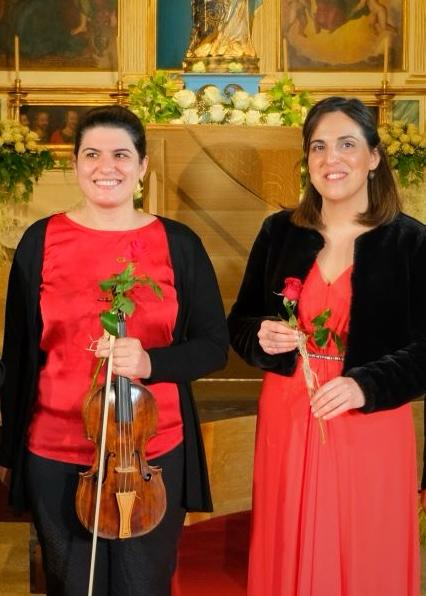
Ensemble Lux Antiqua
Ensemble Lux Antiqua — originally established under the name Ensemble D. José I — gave its first public performance in April 2021. As its musicians maintain a strong artistic and musical connection to the city of Castelo Branco, the project was born at the invitation of the city’s Municipal Council, as part of the celebrations marking the 250th anniversary of Castelo Branco’s elevation to city status by King D. José I, in 1771.
Following this initial project, some of its members expressed the intention of giving the ensemble’s artistic activity greater regularity. In 2026, the ensemble’s base was moved to Lisbon and its current name was adopted, which it has kept ever since, continuing its dedication to the interpretation of Baroque music, with particular attention to historical rigor and to the expressiveness of the musical language of the 17th and 18th centuries.
Since its founding, the ensemble has been dedicated to promoting a repertoire that spans different European schools and sensibilities of the Baroque period, fostering dialogue between composers such as Domenico Scarlatti, Georg Philipp Telemann, and Lodovico Viadana. It was precisely this crossing of traditions — Italian virtuosity, German inventiveness, and the spirituality of sacred polyphony — that characterized its first public performance, back in 2021.
Under the artistic direction and production of Nélia Gonçalves and Sofia Grilo, Lux Antiqua’s mission is to bring early music to new audiences, favoring a historically informed performance approach without foregoing a personal, contemporary reading of the works. Based in Lisbon, the ensemble has been establishing itself as a growing project on the Portuguese Baroque music scene, committed to continuing to explore and promote the vast musical heritage of this period.